
Montreal is an easy city to visit and a slightly confusing one to arrive in. It's in Canada but it runs in French; it's North American but it feels European; it's affordable until the bill comes and you discover the number on the menu wasn't the number you'd pay. None of it is difficult — it's just unwritten. Here are the ten things first-time guests tell us they wish someone had explained before they landed.
1. Yes, it's French — and yes, you'll be fine
Québec's official language is French, and in Montreal you'll hear it everywhere: signs, menus, announcements, the person ahead of you in line. What surprises visitors is how little friction that creates. Most people working in shops, restaurants and hotels downtown switch to English without blinking. The one thing worth doing is opening with a bonjour rather than a hi. It isn't a test — it's just politeness, and it changes the temperature of the conversation. Merci on the way out closes the loop.
2. The price on the tag is not the price you pay
Sales taxes are added at the till, not built into the displayed price. Expect roughly 15% on top of most purchases and restaurant bills — federal and provincial combined. It catches almost every first-timer once. Budget for it, and the city stops feeling more expensive than you were told.
3. Tipping is expected, and the machine will ask
In restaurants and bars, 15–20% before tax is normal. Card terminals prompt you with suggested percentages, sometimes calculated on the after-tax total — you can always tap the custom option and enter your own amount. Tipping isn't expected at counter-service coffee shops in the same way, though the jar is appreciated.
4. The metro is the whole trick
Montreal's metro is clean, fast, and covers everywhere a visitor actually wants to go. Four lines, easy colour-coding, trains every few minutes. Single fares work, but if you're here more than a day or two, an unlimited pass almost always wins on price and completely removes the decision-making. From the airport, the 747 express bus runs 24 hours a day into downtown for the cost of a day pass — take it over a taxi unless you're arriving with a mountain of luggage. We wrote the full version of this in our getting around Montreal guide.
Stay central, walk more than you planned, and use the metro for the rest. That's the whole Montreal transport strategy.
5. It's a walking city, and the neighborhoods are small
The distances look bigger on a map than they feel underfoot. The Plateau, downtown and the Old Port are each perfectly walkable, and often close enough to string together in an afternoon. Comfortable shoes do more for a Montreal trip than any app. If you're deciding where to base yourself, our neighborhood guide breaks down the three characters: the Plateau's nightlife and cafés, downtown's convenience, the Old Port's cobblestone and heritage stone.
6. The weather has opinions — check before you pack
Summer is genuinely hot and humid, and the city lives outdoors: terrasses, festivals, parks, street closures. Winter is genuinely cold, and the city responds by moving part of itself underground — the connected network of tunnels and malls beneath downtown is a real transport option in February, not a novelty. Spring and fall swing wildly day to day. Whenever you come, layers beat a single heavy coat.
7. There's almost always a festival on
Montreal packs an extraordinary number of festivals into its calendar, and most of the big summer ones have substantial free outdoor programming. That's the good news. The other half: festival weeks are when accommodation gets tight and expensive across the city, so book early if your dates overlap one. Our summer festival planning guide lays out the calendar and where to stay for each.
8. Sunday and Monday are quieter than you expect
Plenty of restaurants close on Sunday or Monday, and shop hours are shorter on weekends than in a lot of big cities. It's rarely a problem, but it's worth a quick check before you build a day around one specific place. Museums often have their own quirks — a free evening once a month, a closed day midweek. Two minutes on a website saves a wasted trip across town.
9. Cash is barely necessary — but bring a little
Cards and tap payments work essentially everywhere. Still, a small amount of Canadian cash is handy for a market stall, a tip, or the occasional counter with a card minimum. Notify your bank before you travel so a first-day purchase doesn't get declined, and skip airport currency exchange in favour of an ATM in the city.
10. Where you sleep decides how much of the city you see
This is the one first-timers get wrong most often. Booking cheap and far out saves money on paper and costs you time, transit fares and evenings every single day. Booking central at a traditional hotel is convenient and eats the budget you came here to spend.
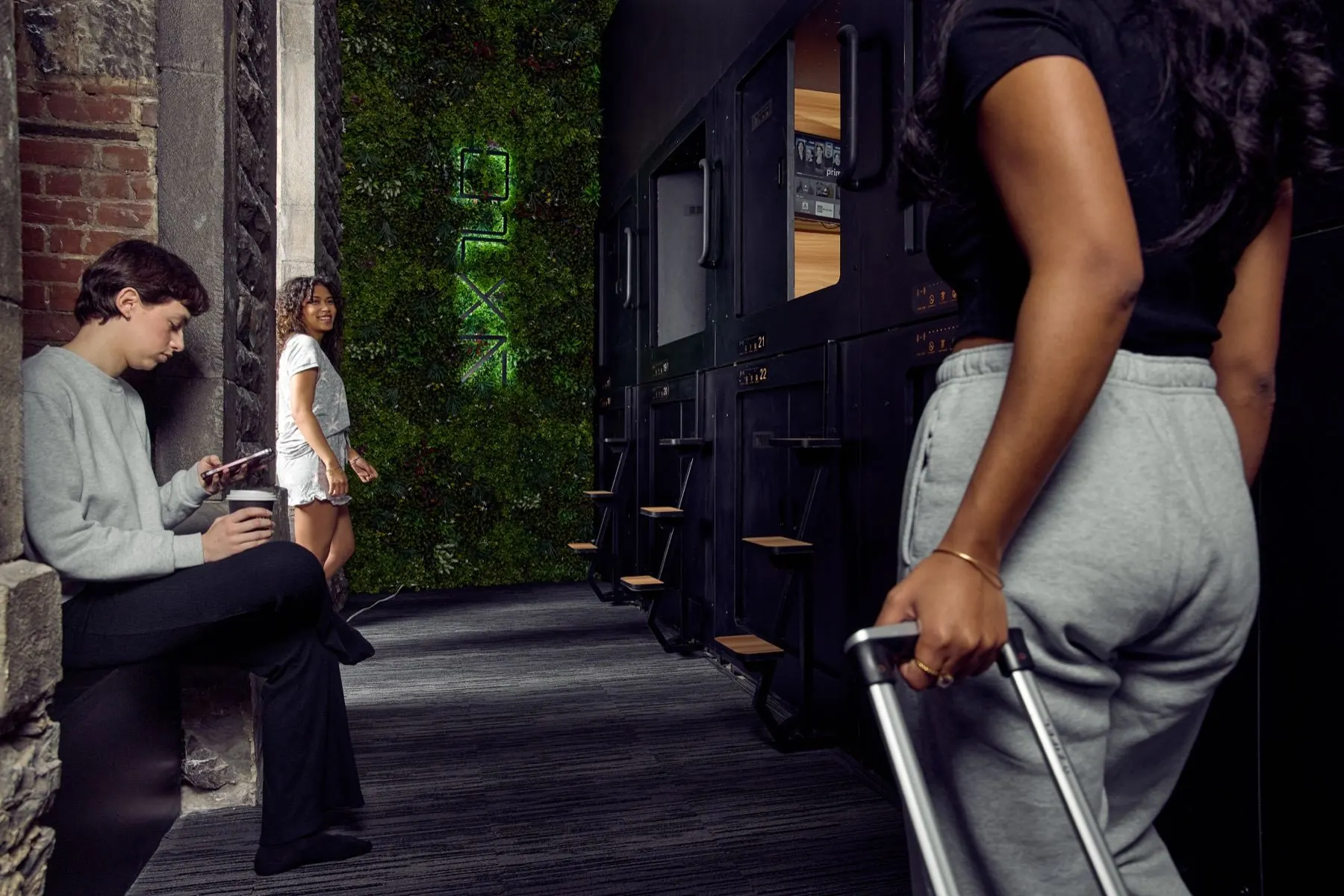
A capsule solves the trade-off. You get a private, enclosed pod with a real locking door — not a curtain, and not a shared dorm — plus a personal locker big enough for a standard suitcase, an in-bed smart TV, adjustable lighting and ventilation. Bathrooms, showers, the kitchen and the lounge are shared, hotel-grade common spaces. What you're paying for is a great location and a private place to sleep, without the square footage you'd spend the whole day away from anyway. Our Bishop residence downtown starts at CA$55 a night.
A few last small things
- Capsules are private and enclosed, but you'll still hear the building. Light sleepers should pack earplugs — that's true of any capsule hotel anywhere.
- Water's free and drinkable — carry a bottle rather than buying them.
- Ask the front desk before you Google. Our teams live here, and the good answer to "where do I eat right now" is rarely the top search result. Our food guide by neighborhood is a decent head start.
- Traveling as a group? School trips, teams and crews are handled directly by Marie at Marielechat@capsuleshotels.com — see our groups page.
First trip to Montreal? Start central.
A private locking capsule in the middle of the city, shared kitchen and lounge, and a team that actually knows the neighborhood. Book from CA$55 a night and put the difference toward the city.